Ornella Serif: Weaving Folklore into Modern Design
There’s a particular feeling you get when you hold a piece of history in your hands—perhaps an old botanical print or a vintage greeting card with edges that feel soft with time. That tactile, authentic sensation is exactly what the Ornella Serif typeface captures digitally. In a landscape often dominated by sleek, minimalist sans-serifs, this premium font stands out by embracing the intricate beauty of European folk art and classical craftsmanship. It doesn’t just spell out words; it etches them into existence. If you are a designer, entrepreneur, or creative looking to infuse your project with a sense of heritage and organic elegance, this display typeface offers a visual language that is both bold and deeply detailed.
Where Bold Structure Meets Hand-Drawn Soul
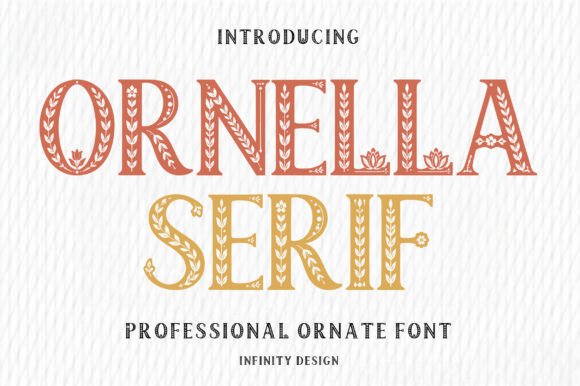
At its core, Ornella Serif operates on a fascinating duality. The foundation of the font is undeniably strong, built upon stately, bold Roman serif frameworks. This ensures that every letter has a stable vertical posture and crisp geometric proportions, making it structurally sound even at a glance. However, it is the interior detailing that truly sets this typeface apart. The core of each capital letter is hollowed out and filled with sprawling botanical vines, symmetrical leaf columns, and blooming wildflowers.
Imagine the texture of a linocut print—that slightly imperfect, carved look where ink meets paper with varying pressure. This font replicates that aesthetic perfectly. The intricate line carvings give it an authentic, handmade feel that digital vectors often struggle to achieve. It balances the heaviness of a display font with the delicacy of illustration. This means you get the impact of a headline with the artistic nuance of an engraving, making it a powerful asset for visual communication.
Strategic Applications for Artisanal Branding
For small business owners and branding specialists, typography is the silent ambassador of your brand. Ornella Serif is not a font for corporate banking reports or tech startups aiming for "disruption." Instead, it is the definitive choice for brands rooted in nature, history, and craftsmanship.
Consider the world of packaging design. If you are developing labels for artisanal organic food, botanical tea, or wellness products, this font instantly communicates purity and tradition. It tells the customer that the product inside is curated with care. Similarly, for vintage book cover illustrations or historic tarot cards, the font provides the necessary gravitas and mysticism. It feels appropriate for the genre without looking like a cliché.
Beyond product packaging, the font shines in the "Cottagecore" and rustic wedding markets. Think of cozy cottagecore branding kits, festive holiday typography headers, or wedding invitations. The botanical fills add a touch of romance and softness that is hard to replicate with standard serif fonts. When you use Ornella Serif, you are essentially decorating your words before you even add a single image.
Integrating Ornella Serif into Your Design Grid
While this is a "showstopper" font, using it effectively requires a bit of strategic thinking. Because of its high level of detail, Ornella Serif functions best as a display typeface. This means it is perfect for large headlines, logos, and pull quotes, but it should generally be avoided for long-form body text where the intricate details might become muddy or distract from readability.
When working with minimal layouts, this font creates a beautiful focal point. If your design grid is clean and white-space-heavy, a single word set in Ornella Serif can anchor the entire composition. Conversely, it works incredibly well on textured cardstocks and earthy backgrounds, where the "carved" nature of the letters can interact with the grain of the paper.
To maintain visual consistency and brand recognition, use the font strategically. Don't overuse it. Let it serve as the headline act, and pair it with a supporting cast that doesn’t compete for attention. This approach ensures that the font elevates your design rather than overwhelming it.
Mastering Font Pairings and Hierarchy
One of the most common questions regarding ornate display fonts is, "What do I pair it with?" Because Ornella Serif is so rich in detail, you need a partner that is clean and unobtrusive.
- Sans Serif Fonts: A clean, geometric sans-serif acts as the perfect counterbalance. The simplicity of the sans-serif allows the botanical details of Ornella to breathe. This pairing is excellent for web design and social media graphics, where you need the header to pop but the supporting text to be legible on screens.
- Simple Serifs: If you want to keep a traditional vibe, pair it with a transitional serif font that has a lower contrast and fewer details. This works well for editorial design and print materials.
- Handwritten or Script Fonts: For a more whimsical, storybook aesthetic, a loose handwritten font can complement the folk-art roots of Ornella Serif. However, use caution here to ensure the two don't clash visually.
Always test your font pairings at the actual size they will be viewed. What looks like a beautiful harmony on a large monitor might look like a cluttered mess on a mobile screen or a small product label.
Readability and Licensing: The Practical Details
As with any premium font, there are technical and legal considerations to keep in mind. First, regarding readability: the "hollowed out" nature of the capitals means that color contrast is vital. If you place this font on a busy background image, the text may become illegible. Ensure there is enough negative space or a solid color backing to let the intricate details shine through. The font is engineered with stable proportions, which helps, but the artistic fills require a clear viewing environment.
Second, review the specific font styles included in the package. Often, ornate fonts come with different versions—perhaps a "clean" version without the fills for smaller sizes, or alternate characters that allow for customization. Understanding what is in your toolkit helps you maximize the value of the asset.
Finally, a note on commercial licensing. If you are a creative entrepreneur or a small business owner, you are likely using this font for profit-generating activities—whether that’s selling merchandise, creating client logos, or publishing digital products. Always verify that your license covers these specific use cases. Respecting the licensing terms ensures that the typographers who crafted this beautiful tool can continue to create high-quality design assets for the community.
Ultimately, Ornella Serif is more than just a typeface; it is a bridge between the digital age and the rich traditions of European art. It offers a way to tell your story with depth, history, and an undeniable sense of style. Whether you are designing a logo for a local bakery or laying out a vintage-inspired magazine, this font provides the character and authority to make your vision a reality.