Lotter: A Blackletter Font with a Reformation Soul
Imagine holding a piece of history in your hands—not a dusty artifact, but a living tool for creation. The Lotter font is precisely that. Born from the pages of a 1515 treatise printed by Melchior Lotter in Leipzig, this typeface carries the weight of the medieval world into your modern design projects. It's not just a font; it's a bridge to an era of hand-colored engravings, intricate initials, and the dawn of printed thought. For designers and creators seeking to inject authenticity and depth into their work, Lotter offers a connection to a lineage of printers who played a quiet yet pivotal role in the Reformation.
More Than Just Gothic Lettering
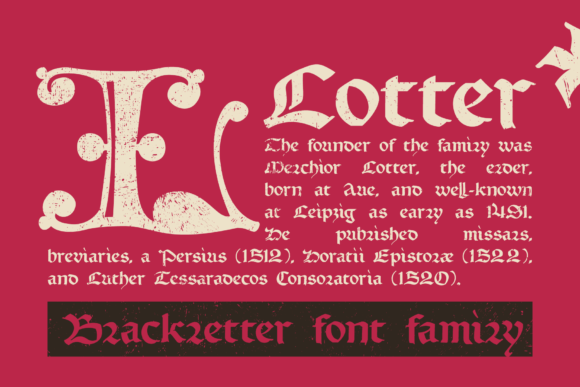
What sets Lotter apart from generic blackletter fonts is its specific origin story and thoughtful design. The inspiration comes from the beautiful, decorative initials and religious illustrations in that 1515 volume. This isn't a cold, digitized replica. The Lotter font family, with its two styles—Regular and Dropcap—captures the organic, slightly imperfect feel of early print. The elder Melchior Lotter was an innovator, known for using Roman type for Latin texts and Gothic for German. This historical nuance is embedded in the font's DNA, offering a sense of purposeful design rather than mere stylistic imitation.
The Regular style provides the foundation for body text, evoking the dense, readable blocks of medieval manuscripts. The Dropcap style is where the magic of that 1515 treatise truly shines. These are not simple enlarged first letters; they are ornate, illuminated characters designed to command attention. Using the Dropcap at the beginning of a chapter, article, or key section instantly creates a focal point and establishes a rich, historical tone. This two-style system gives you everything needed to construct a complete, period-accurate typographic hierarchy.
Practical Applications for the Modern Creator
So, how do you use a font with such a distinct historical personality in today's market? The key is to deploy it with intention. Lotter excels as a display font for headlines, titles, and short bursts of text where its intricate details can be appreciated. Think of it as a specialized tool in your design assets kit, perfect for specific projects that demand a touch of gravitas or artisanal quality.
For branding and logo design, Lotter can define a brand identity rooted in tradition, craftsmanship, or a connection to history. A brewery, a boutique law firm, a publisher of classic literature, or a high-end craftsman could use it to convey legacy and expertise. In packaging design, it lends an air of old-world authenticity to products like artisanal foods, spirits, or handmade goods.
Its impact extends to social media graphics and web design. A Lotter dropcap can transform a blog post header or a website banner, making the content feel more substantial and curated. For editorial layouts in magazines or digital products like e-books and PDF guides, it can structure chapters and section breaks with elegant authority. Print materials like wedding invitations, event posters, or certificate designs gain a ceremonial weight. Even merchandise like t-shirts or tote bags can tell a richer story with typography that has a built-in narrative.
Pairing and Readability: The Practical Balance
The most common question with a blackletter font is about readability. Here’s the straightforward advice: use Lotter for display purposes, not for long paragraphs of body copy. Its strength is in its decorative impact. The Regular style is more legible than many Gothic types, but for extended reading, pair it with a clean, complementary font.
Successful font pairing is about contrast and harmony. Let Lotter handle the hero moments—a striking headline, an elegant dropcap—while a simple serif font or even a clean sans serif font manages the supporting text. For example, pair a Lotter headline with a font like Garamond or Helvetica for the body. This contrast ensures your message is both impactful and clear. Always test your pairings at various sizes and on different backgrounds to check for readability across marketing assets and platforms.
Choosing Your Style and Considering Licensing
Understanding the two included styles is crucial. The Dropcap style is your decorative element. Use it sparingly for maximum effect—perhaps at the start of a chapter, on a poster title, or as a monogram. The Regular style is for headings and subheadings where you want the Lotter aesthetic to persist throughout a block of text, like a book title or a ceremonial program.
Before you dive into a commercial project, always review the commercial licensing terms for the premium font. This is a non-negotiable step for any professional work, ensuring you have the proper rights for your client's brand, their product packaging, or their published materials. Reputable font foundries provide clear licensing options for different uses, from desktop to web to digital products.
Ultimately, Lotter is more than a typeface; it's a piece of typographic history. It offers a way to ground your visual communication in a story of innovation and artistry. By using it thoughtfully—as a powerful accent rather than a ubiquitous workhorse—you can elevate your designs with a layer of authenticity and sophistication that modern fonts often lack. It’s a tool for those who want their work to have not just style, but soul.