Badeg: The Handwritten Font That Feels Like a Conversation
You know that feeling when you meet someone and instantly click? They're elegant but not stuffy, funny but not trying too hard, and they have this warmth that makes you want to keep talking. That's exactly what it's like discovering a typeface that just works—the one that makes your designs feel human, approachable, and unmistakably yours. Badeg is that kind of font. It's a handwritten typeface with personality to spare, and if you've been searching for something that bridges the gap between playful and polished, you might have just found your new go-to creative asset.
What Makes a Handwritten Font Actually Work?
Let's be honest: the world is drowning in handwritten fonts. Some look like they were scribbled during a boring meeting. Others try so hard to look "authentic" that they become illegible. The tricky part about finding a quality script font is that it needs to accomplish something most display fonts don't—it has to feel genuinely personal while still functioning as a usable design element across different contexts.
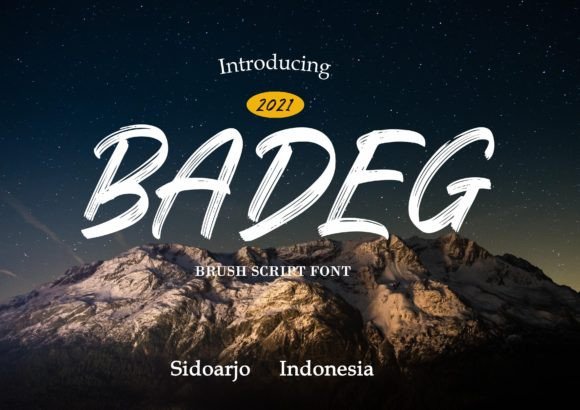
Badeg manages this balance with a kind of effortless grace. The letterforms have that natural, slightly imperfect quality you'd expect from someone with genuinely nice handwriting, not a font that's been over-engineered to simulate imperfection. The strokes flow with a rhythm that feels organic, and the overall tone sits in that sweet spot between whimsical and professional. It's the difference between a font that looks like it's trying to charm you and one that simply does.
What really sets it apart in a crowded market of creative fonts is its versatility. Some handwritten typefaces lock you into a single mood—either too casual for anything serious or too refined for anything fun. Badeg adapts. Pair it with a clean sans serif font for a modern branding project, and it adds warmth without undermining professionalism. Use it alongside a serif typeface for editorial layouts, and it introduces a human touch that breaks up formality in the right way.
Where This Typeface Truly Shines
Think about the brands you're drawn to. The coffee shop with hand-lettered chalkboard menus. The boutique skincare line whose packaging feels like it was designed by a friend. The Instagram account whose graphics somehow feel personal even though they're clearly produced with intention. Behind most of those visual identities is a carefully chosen typeface doing a lot of heavy lifting.
Badeg excels in exactly these kinds of projects. Here's where it really earns its place in your design assets library:
- Logo design and brand identity — If you're building a brand for a small business, a creative studio, a bakery, a lifestyle blog, or really any venture that benefits from a human touch, Badeg gives your logo instant character. It tells people there's a real person behind the brand, not just a corporation.
- Packaging design — Think artisan food products, handmade candles, craft beverages, or cosmetics. When your packaging uses a handwritten font that actually looks handcrafted, it elevates the perceived value of what's inside.
- Social media graphics — Posts, stories, reels covers, quote graphics—these thrive on personality. A typeface like Badeg makes your content feel less like marketing and more like a message from someone your audience actually wants to hear from.
- Invitations and event materials — Wedding invitations, party flyers, workshop announcements, and event signage all benefit from that hand-lettered feel. It sets the mood before anyone reads a single word.
- Merchandise and print products — Tote bags, mugs, greeting cards, stickers, posters—products where the typography is the design need a font with enough personality to stand on its own.
- Websites and blogs — Used strategically in headers, pull quotes, or accent text, a handwritten display font like Badeg can soften a digital experience and make a website feel more inviting.
- Digital products and marketing assets — E-book covers, lead magnets, email headers, course materials, and sales pages all benefit from typography that captures attention without feeling corporate.
The Practical Side of Choosing Typography
Here's something many people overlook when selecting a font: it's not just about how it looks in isolation. It's about how it performs in the ecosystem of your project. A beautiful typeface that doesn't pair well with your body text, or that becomes unreadable at small sizes, creates more problems than it solves.
When you're evaluating a premium font like Badeg for a project, start by thinking about your goals. Are you trying to communicate warmth and approachability? Establish a creative or artisan identity? Add visual interest to otherwise flat layouts? The answers should guide your choices.
One of the most practical things you can do is test font pairings before committing. Badeg works beautifully alongside geometric sans serif fonts for a contemporary feel, or with classic serif typefaces when you want to blend tradition with personality. Try setting your headline in Badeg and your body copy in a clean, highly readable typeface like a modern sans serif. The contrast creates visual hierarchy while keeping the overall design cohesive.
Readability is another consideration that deserves honest attention. Handwritten fonts, by nature, are best suited for display purposes—headlines, logos, short phrases, and accent text. You wouldn't set a full paragraph of body copy in Badeg any more than you'd use a bold display font for an essay. That's not a limitation; it's just understanding how different typeface categories work. Use Badeg where it shines—where you want to draw the eye and create emotional impact—and let a more neutral font handle the heavy reading.
Take time to explore the font styles included in the Badeg family, too. Many premium fonts come with alternates, ligatures, or stylistic variations that give you additional creative flexibility. These extras can make the difference between a design that looks like it used a template and one that feels genuinely custom.
Building a Brand People Actually Remember
Visual consistency is one of those things that sounds boring but is actually the backbone of every brand people recognize and trust. When your typography, colors, and design language stay coherent across your website, social media, packaging, and printed materials, something powerful happens—people start to recognize you before they even read your name.
A typeface like Badeg can become a signature element of that visual system. Imagine scrolling through Instagram and seeing a quote graphic with that distinctive handwritten style—you'd know whose account it was before checking the handle. That's the kind of brand recognition that doesn't come from a logo alone. It comes from a thoughtful, consistent approach to visual communication where every element, including your font choice, reinforces who you are.
For small business owners and creative entrepreneurs especially, this matters enormously. You're competing for attention in crowded spaces, and the details that make your brand feel human and intentional are what set you apart. The right typeface doesn't just make things look prettier—it communicates values, sets expectations, and builds the kind of familiarity that turns casual viewers into loyal customers.
A Few Honest Words About Licensing
Before you download any commercial font, it's worth taking five minutes to understand the licensing. If you're using Badeg—or any premium typeface—for client work, merchandise, or products you sell, make sure you have the appropriate commercial license. Most font licenses distinguish between personal and commercial use, and some have specific terms for things like embedding in digital products or using on merchandise above a certain quantity. It's not the exciting part of the creative process, but it protects both you and the type designer who put real craft into creating the font.
At the end of the day, the best font for your project is the one that serves your goals, resonates with your audience, and feels right for the story you're telling. Badeg brings something genuinely valuable to the table—a handwritten typeface that's elegant without being pretentious, funny without being gimmick, and versatile enough to earn a permanent spot in your creative toolkit. Add it to your collection, experiment with it across different projects, and see how it transforms the way your work communicates.