Texas: Capturing the Spirit of the American West in Your Designs
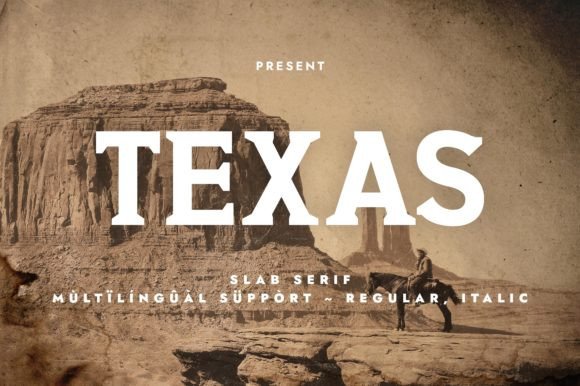
There’s a certain feeling that comes with the imagery of the American frontier—rugged, bold, and unmistakably confident. When you’re working on a project that needs to channel that energy, whether it’s a craft brewery label or a vintage-inspired movie poster, the typography you choose isn’t just decoration; it’s the voice of your project. If you’ve been hunting for a typeface that brings that wide-open, dusty-road aesthetic to life without looking like a cliché, you might want to take a closer look at Texas. This American slab serif isn’t just a collection of letters; it’s a vibe, specifically engineered to express the wild west cowboy culture that resonates so deeply in pop culture and branding today.
Capturing the Frontier Vibe
What makes a font like this work so well is its structural integrity. Slab serifs are known for their thick, blocky serifs, and Texas leans into that heavy, grounded look. It feels sturdy, like a wooden beam in a saloon or the bold headlines of a 19th-century wanted poster. But unlike some vintage typefaces that can feel dated or hard to read, this one balances that historical weight with a sense of clarity. It’s perfect for anyone looking to inject a bit of history into their work, whether you are designing a book cover for a western novel or creating a logo for a brand that prides itself on heritage and authenticity.
The visual appeal here lies in its versatility within a specific niche. It doesn’t try to be everything to everyone, and that’s its strength. It knows exactly what it is: a display font with personality. If you are working on a retro theme, this typeface fits in perfectly. It doesn’t fight against other vintage design assets; it complements them. Think about the lettering you might see on old movie posters or the mastheads of retro comic magazines—Texas brings that same energy to the table, allowing you to create a cohesive aesthetic that feels instantly recognizable.
Practical Applications for Modern Creators
You don’t have to be making a western movie to use a font like this effectively. The "wild west" aesthetic has evolved into a broader design trend that signals ruggedness, durability, and a "do-it-yourself" spirit. Here is where this typeface really shines in practical, modern applications:
- Branding and Logo Design: For a startup that wants to stand out from the sea of minimalism, a slab serif like this can be a game-changer. It’s excellent for brands in the outdoor gear, craft beer, or artisanal food industries. It suggests that the product is handcrafted and built to last.
- Packaging Design: On a shelf crowded with sleek, modern fonts, a bold display typeface grabs attention. If you are designing labels for hot sauce, BBQ rubs, or even boutique coffee, the thick strokes of this font ensure the product name is legible from a distance.
- Editorial and Book Covers: Genre fiction often relies heavily on typography to signal the story inside. A font with this much character can immediately tell a reader, "This is an adventure," or "This is a thriller." It works beautifully for headlines in magazines or the spines of hardcover books.
- Merchandise and Apparel: T-shirt design is one of the most popular uses for bold display fonts. Because the letterforms are distinct and chunky, they reproduce well on fabric and remain readable even when printed on textured materials.
- Digital Assets: Don't limit yourself to print. In web design, using a display font for headers can break up the monotony of standard sans-serif body text. It adds a layer of visual interest to landing pages and can be used effectively in social media graphics to stop the scroll.
Enhancing Your Brand Identity
One of the hardest parts of building a brand identity is finding a voice that feels consistent across all platforms. When you choose a typeface like Texas, you are adopting a specific persona. It helps with brand recognition because the style is so distinctive. When a customer sees that bold, slab-serif font on a poster, and then sees it again on a website header or an Instagram story, the connection is immediate. It creates a professional presentation that looks curated rather than accidental.
However, using a display font effectively requires a bit of strategy. Because it has such a strong personality, you have to be careful not to overwhelm your design. The key is to use it for impact—headlines, sub-headers, and logos—while pairing it with something more neutral for the body text. You wouldn't want to write a full paragraph in this style, as the readability would suffer over long distances. Instead, think of it as the loudspeaker for your key messages and use a clean sans-serif or a simple serif font for the smaller details.
Strategic Typography and Font Pairing
Matching typography to your project goals is about contrast and harmony. If your goal is to evoke a vintage, retro feel, you might pair a heavy slab serif with a textured background and a classic script font for accents. If you want a more modern take on the western aesthetic, try pairing it with a geometric sans-serif. The contrast between the rugged, historical letterforms and the clean, modern lines creates a dynamic tension that feels fresh and professional.
Before you finalize a design, always test your font pairings. Look at how the x-heights align and whether the weight of the display font clashes with or complements the body text. You want a hierarchy that guides the viewer's eye naturally. The boldness of the Texas typeface makes it an excellent anchor for this hierarchy, grounding the design and giving it a strong focal point.
Technical Considerations and Licensing
When investing in a premium font for commercial projects, it’s not just about the looks; it’s about the utility. A high-quality creative font will usually come with multiple styles or weights, giving you more flexibility to create hierarchy without mixing too many different families. Check to see what is included in the font package—look for variations like bold, outline, or textured versions that can add depth to your designs.
Equally important is the licensing. If you are a small business owner or a freelancer, you need to ensure that your license covers your specific use cases. Most commercial fonts require a license that covers the number of users or the specific platforms where the font will be used (like a website vs. a physical product). Always review the licensing terms to avoid legal headaches down the road. It ensures that you can use your design assets confidently in your marketing, packaging, and merchandise without restriction.
Ultimately, choosing a font like this is about making a statement. It’s about stepping away from the safe, generic choices and embracing a typeface that has character and history. Whether you are revamping a brand identity, launching a new product line, or just looking for the perfect lettering for a creative project, exploring a typeface rooted in American culture can add a layer of depth and storytelling that standard fonts simply can't match.