Refraction Ray: The Creative Font That Catches the Light
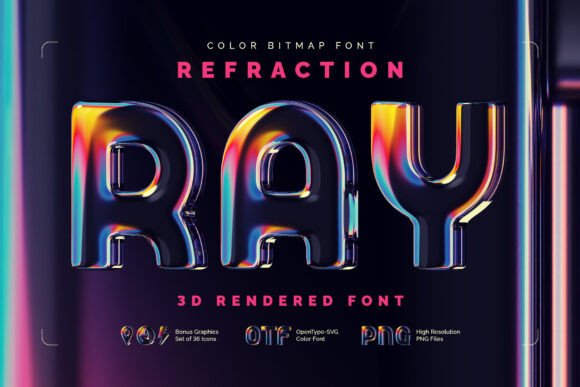
Imagine a typeface that doesn't just sit on the page but seems to glow from within, casting subtle, colorful shadows that shift with your perspective. That's the immediate impression of Refraction Ray, a display font set that merges modern 3D design with the mesmerizing depth of abstract glass. Its letters are smooth, rounded, and built with a texture that mimics light refracting through a prism—think soft blues, greens, and purples blending seamlessly into one another. This isn't just another decorative font; it's a design asset crafted to inject a sense of wonder and sophistication into any project it touches.
Where Artistry Meets Functionality in Modern Typography
Refraction Ray occupies a unique space in the world of creative fonts. It’s a premium font that prioritizes visual impact without sacrificing clarity. The rounded letterforms ensure readability, even at larger sizes where the intricate glass texture becomes most apparent. This balance is crucial. A font that’s all style and no substance quickly becomes frustrating to use. Here, the artistic flair of the abstract glass effect is carefully contained within shapes that remain legible and friendly. It’s a typeface that speaks of creativity, innovation, and a touch of luxury, making it ideal for projects that need to stand out in a crowded visual landscape.
Think about the last time a piece of design truly captivated you. Often, it’s the typography that sets the initial tone. A font like Refraction Ray does exactly that. It doesn’t just display words; it creates an atmosphere. The subtle interplay of color and light within each character can evoke feelings of curiosity, elegance, or playful energy, depending on the context and colors you pair it with. This emotional resonance is a powerful tool for anyone building a brand or crafting a message.
Practical Applications: From Brand Identity to Digital Campaigns
So, where does a font with such a distinct personality actually work? The applications are surprisingly versatile, especially when used strategically. Its strength lies in headlines, logos, and key visual elements where you want to make a memorable first impression.
For Branding and Logo Design: Refraction Ray can become the cornerstone of a brand identity for businesses in creative fields—think boutique agencies, tech startups focused on innovation, artisanal product makers, or entertainment venues. A logo set in this font immediately communicates modernity and creativity. When used for a brand name on a website header or packaging, it creates a focal point that draws the eye and reinforces the brand's unique character. Pair it with a clean, neutral sans-serif font for body text to maintain a professional and readable hierarchy.
For Packaging and Physical Products: On product packaging, especially for cosmetics, specialty foods, or lifestyle goods, the font’s glossy, light-refracting quality can suggest premium ingredients and attention to detail. It can make a product shelf pop, competing effectively for consumer attention. The key is to use it for the product name or key feature callouts, ensuring the essential information remains in a more straightforward typeface.
For Digital Presence and Marketing: In the digital realm, Refraction Ray shines in social media graphics, website hero sections, and blog post titles. A bold headline in this font can stop the scroll, increase engagement on platforms like Instagram or Pinterest, and give your content a distinct visual signature. For digital products like e-books or online course materials, using it for chapter titles or section headers can enhance the perceived value and make the learning experience feel more polished and engaging.
Making It Work: Pairing, Readability, and Licensing
Introducing a display font like Refraction Ray into your toolkit requires a thoughtful approach. Its very distinctiveness means it shouldn’t be used for long paragraphs of text; that would overwhelm the reader and undermine readability. The goal is to use it as a highlight.
A fundamental practice in typography is font pairing. The colorful, textured nature of Refraction Ray pairs exceptionally well with simpler, more understated companions. A classic sans-serif like Helvetica, Arial, or a geometric sans-serif provides a clean, modern counterbalance. A traditional serif font like Garamond or Times New Roman can create an intriguing contrast between the contemporary and the classic. The trick is to let Refraction Ray be the star of the show in headlines, while its partner font handles the supporting role of body copy.
Before committing to a font for a major project, always test it. Type out key words, your brand name, or common phrases. Check the legibility at various sizes, especially the smaller sizes you might use for subheadings. Examine the spacing between letters (kerning) and words. Does it feel balanced? Does the unique texture become distracting at a certain point? This testing phase is non-negotiable for professional work.
Finally, a crucial and practical consideration is licensing. Refraction Ray is a commercial font, and its license dictates how you can legally use it. Licenses typically vary based on usage: a desktop license for installing on your computer for print and logo design, a webfont license for embedding on your website, and an app or server license for other digital products. Always review the specific license terms provided by the seller to ensure your intended use—whether for a client project, merchandise, or a digital download—is fully covered. This protects both you and the font creator.
Unlocking Creative Potential with Intentional Design Choices
Ultimately, a font like Refraction Ray is a tool for visual storytelling. It’s not about using the flashiest option everywhere, but about selecting the right typeface to convey a specific message and feeling. By understanding its strengths—its ability to catch the light, its modern 3D aesthetic, its rounded friendliness—you can deploy it with intention. Use it to mark a special section, to create a celebratory atmosphere for an invitation, or to give a poster an undeniable wow factor. When matched thoughtfully with your project’s goals and paired wisely with complementary fonts, Refraction Ray becomes more than just a set of letters; it becomes a catalyst for creating work that is both beautiful and effectively communicates your unique vision.